Nutrition Education and Healthy Dining Hall Initiatives on Campus
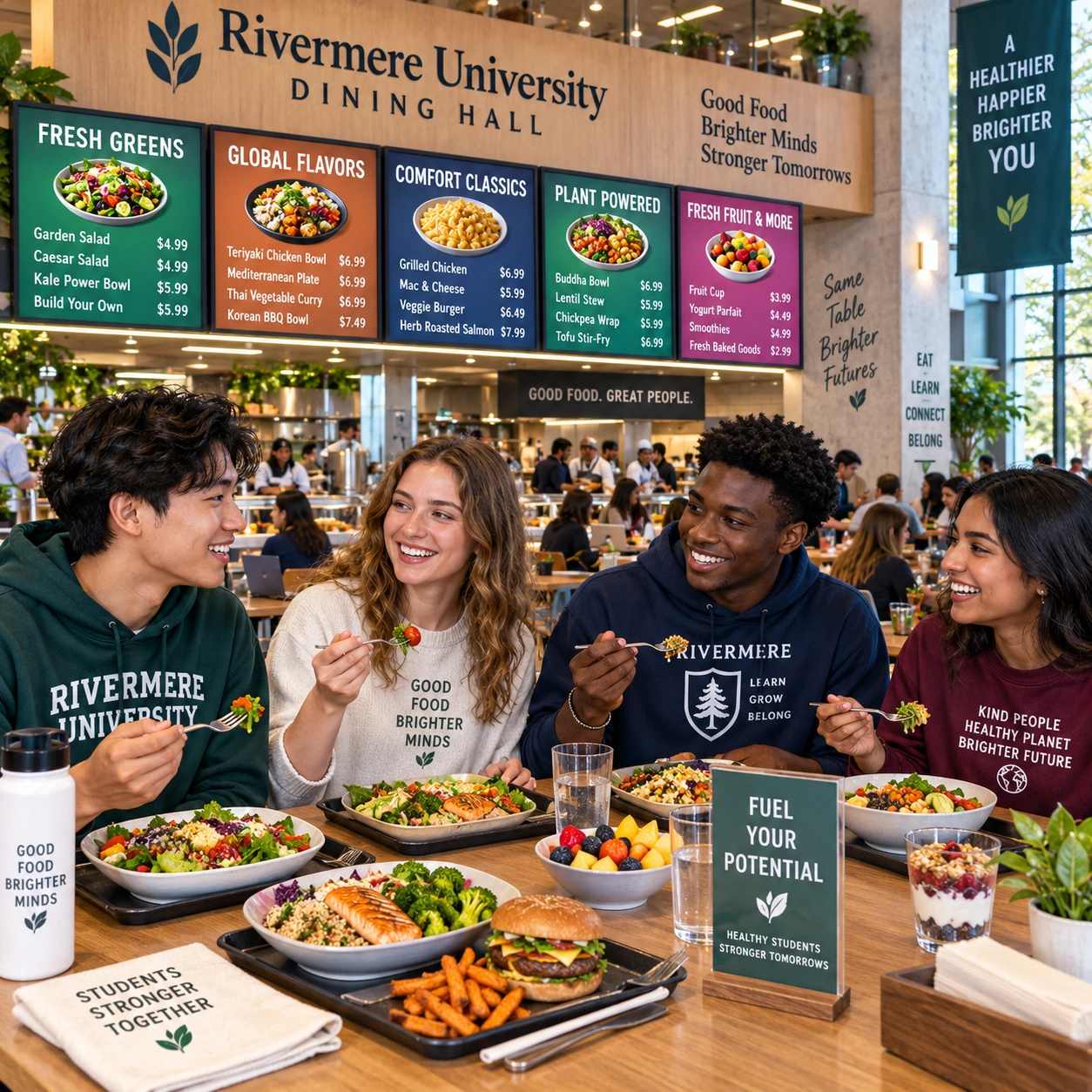
Campus dining is part of everyday student life, making the dining hall a practical place to support campus health promotion. When nutrition education connects with appealing, accessible meals, students can build food literacy and make choices that suit their needs, preferences, and budgets.
Effective initiatives avoid treating healthy eating as a test of willpower. They combine useful information with a nutrition environment where balanced options are easy to find, culturally welcoming, and available to students with different dietary requirements.
Why dining halls matter to campus health
Dining halls matter because they shape what food students can access and encounter in a typical day. Pairing that everyday access with campus health promotion can make healthy food choices more practical without suggesting that dining is the only influence on nutrition.
Students’ eating patterns are affected by many factors, including class schedules, housing, food costs, work, family traditions, health needs, and access to kitchens. A campus dining hall cannot address every barrier, but it can reduce some of them by offering reliable meals and clear information in a familiar setting.
Dining staff and campus health teams can coordinate menu planning, communication, and food literacy activities. For example, a dining team might offer a customizable grain bowl with vegetables, beans, and several sauces, while a campus educator shares simple ideas for combining ingredients. The point is to offer options, not prescribe a single ideal plate.
That distinction matters. A strong nutrition environment supports student choice and recognizes that “healthy” depends on context, including culture, allergies, disability, budget, and personal preference. Dining halls contribute to campus wellness when they make nourishing meals feasible and welcoming alongside a broad range of food.
Make nutrition education practical and inclusive
Practical nutrition education gives students useful skills and information without shame, rigid rules, or unnecessary technical language. It helps students understand food and make choices that fit their lives, rather than labeling foods or people as good or bad.
Food literacy can include reading menus, comparing ingredients, planning a satisfying meal, understanding food safety, and adapting recipes to available ingredients. Short, focused learning moments often fit campus life better than lengthy lectures. A dining hall can offer a five-minute demonstration, a simple menu guide, or a brief conversation with a trained educator.
Use clear, neutral language. Instead of telling students to “avoid” a food, explain what an ingredient offers or how a dish can be customized. Information should be useful to students with varied levels of nutrition knowledge and should avoid assuming that everyone has the same budget, cooking facilities, or dietary goals.
Inclusive education also means checking who can use the information. Offer materials in accessible formats and consider language needs, cultural food traditions, allergies, and religious dietary practices. Invite students to point out gaps rather than assuming one communication style works for everyone.
- Keep advice actionable: Show how to build a meal from foods available that day.
- Respect choice: Provide options without pressuring students to follow a particular diet.
- Make information easy to scan: Use plain wording, readable signs, and accessible digital materials.
Design a dining environment that supports healthy choices
A dining environment supports healthy choices when nourishing options are available, easy to identify, and appealing to eat. Menu variety, clear food labeling, thoughtful placement, and reasonable access all help students make informed decisions.
Start with menu planning that provides variety across the week. Include vegetables, fruits, whole grains, and protein options, while making room for familiar dishes and culturally meaningful foods. Vegetarian and vegan meals, allergen-aware choices, and options that accommodate religious practices should be visible and clearly described. Variety matters more than relying on one “healthy” special that appears occasionally.
Food labeling should help students answer practical questions quickly. Signs can identify major ingredients, common allergens, vegetarian or vegan status, and other relevant dietary information. Keep labels consistent and update them when recipes change. A label that is inaccurate or too crowded can create confusion, so dining teams need a dependable process for reviewing menu information.
Placement can influence what students notice, but it should not become a barrier or a form of pressure. Make balanced meal components easy to find across service areas, and consider whether queues, serving utensils, signage, or limited hours make particular options harder to access. Convenience is part of the nutrition environment.
There are trade-offs. Expanding variety may require more staff time, procurement planning, or ingredient storage. Campuses can begin with a small pilot, such as adding a rotating plant-forward entrée or improving signs at one station, then review student response and operational feasibility before scaling up.
Engage students in shaping dining initiatives
Student engagement makes dining initiatives more relevant because students can identify what works, what is missing, and what creates barriers. Include students early in planning, not only after a menu or campaign has already been set.
Campuses can gather input through brief surveys, dining hall comment boards, student government, residence hall groups, cultural organizations, and campus wellness committees. Ask specific questions: Which meal periods have limited choices? Are labels clear? What foods would students like to see more often? Can students with food allergies find dependable information?
Student groups can help co-design tasting events, recipe demonstrations, menu feedback sessions, or food literacy campaigns. Dining staff bring expertise on purchasing, kitchen capacity, food safety, and service flow; campus health teams can help make educational material accurate and nonjudgmental. Collaboration works best when responsibilities and decision-making limits are transparent.
Close the feedback loop. If students suggest more late-night options or clearer ingredient details, explain what the dining team can change, what needs more review, and why. Even when a request cannot be met immediately, a clear response shows that participation has a purpose. Avoid asking for feedback repeatedly without reporting what happened to it.
Connect education with the dining experience
Nutrition education is most useful in a dining hall when it connects directly to food students can see, choose, and taste. Menu guides, demonstrations, and brief conversations can turn general information into practical learning without interrupting the meal.
A menu guide might explain the ingredients in a featured dish and offer simple ways to adapt it, such as choosing a different grain or sauce. A food demonstration could show how a dining hall’s vegetables or beans can be combined into a quick meal. Signs can link to recipes or explain unfamiliar ingredients, provided the digital information is easy to access and kept current.
Consider designing activities around common decisions rather than idealized meal plans. For instance, a “build a meal your way” station could display several combinations using foods already served. Students learn about balance and variety while retaining control over portions, ingredients, and taste.
Keep the experience low-pressure. A tasting table or educator-led activity should welcome questions and make room for different preferences. If an event is popular but difficult to staff, try shorter sessions, peer volunteers with training, or rotating demonstrations. The format should fit the dining operation, not add friction to it.
Evaluate and refine campus initiatives
Campuses can assess dining initiatives by reviewing participation, student feedback, menu access, and operational experience over time. Use a small set of measures to learn what is useful, then adjust the program rather than treating evaluation as a pass-or-fail judgment.
Before launching an initiative, define what it is meant to improve. A food-labeling project might aim to make ingredient and allergen information easier to find; a demonstration might aim to increase participation in food literacy activities. Clear aims help teams choose relevant measures and avoid relying on one number, such as attendance, to represent success.
Possible measures include:
- Participation in tastings, demonstrations, or student feedback activities.
- Student reports on whether labels are clear and menu options feel accessible.
- Dining staff feedback about preparation, service flow, and ingredient information.
- Availability of varied meals across locations and meal periods.
Combine counts with comments. A well-attended event may still miss students who work evenings or live off campus. A short survey, listening session, or comment channel can reveal those gaps. When collecting feedback, explain how it will be used and protect students’ privacy.
Review results with students, dining staff, and campus health teams. Keep the parts that work, revise what creates confusion, and test changes on a manageable scale. The most useful assessment is an ongoing conversation between what the campus offers and what students can realistically use.
Frequently asked questions
What is nutrition education in a campus dining hall?
It is practical, nonjudgmental learning connected to dining choices and food skills. It may include menu information, food demonstrations, ingredient guidance, or help understanding how to adapt a meal to individual needs.
How can dining halls make healthy choices easier to find?
They can offer varied meals, place nourishing options where students can access them conveniently, and use consistent labels for ingredients and dietary information. Clear information should be accurate and easy to scan.
How can students get involved in improving campus dining?
Students can share specific feedback through dining surveys, student organizations, wellness committees, tasting events, or direct conversations with dining staff. They can also help co-design activities and report whether changes address real barriers.
How can a campus assess whether an initiative is useful?
Set a clear goal, then review participation, student experience, menu access, and staff feedback. Combine simple counts with comments, share what the campus learns, and use the results to refine the initiative.