Online Casinos in Montreal 2026: A Bilingual Player's Guide to Quebec Gambling Law, CAD Payments, and Cutting Through the 'casino en ligne montreal' Search
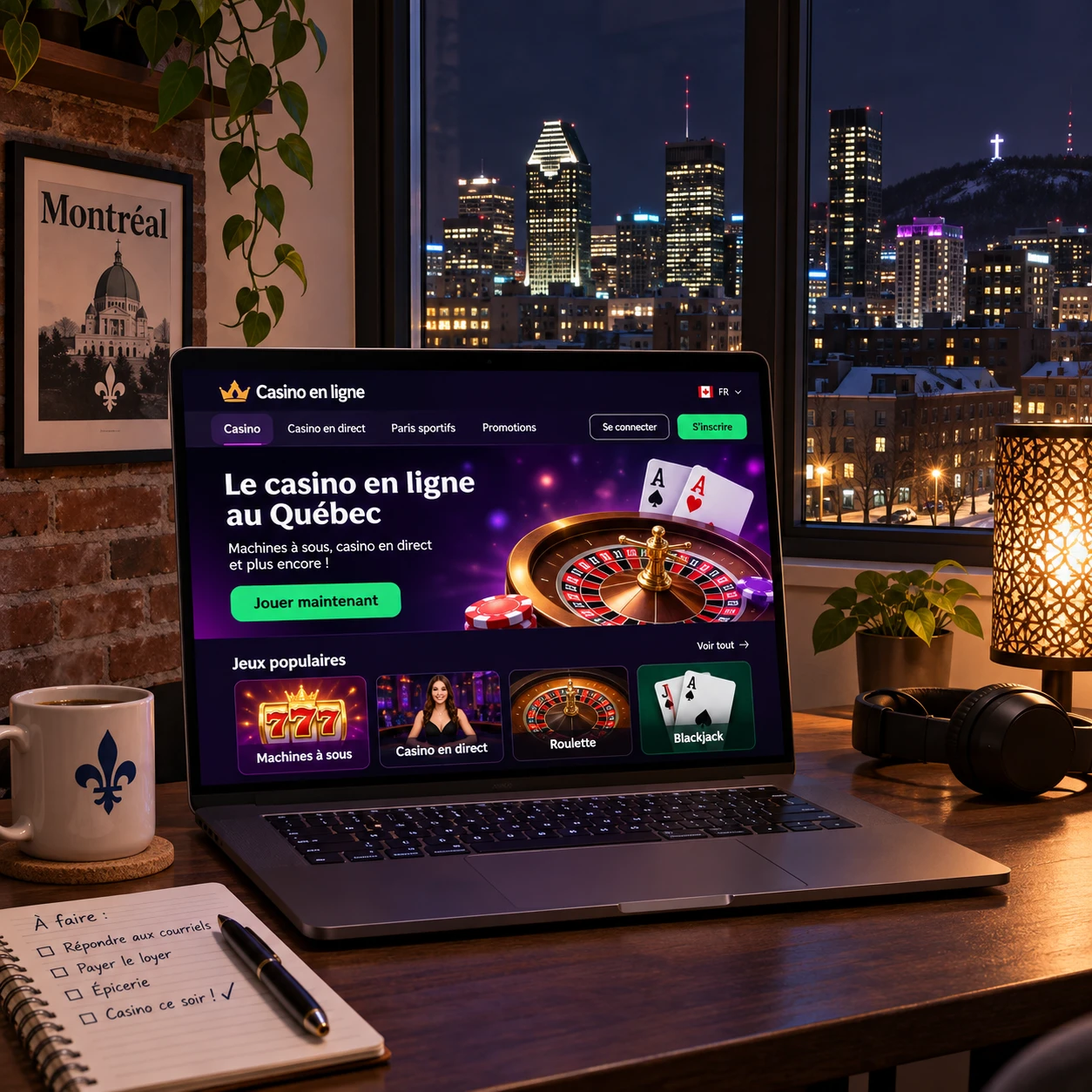
This scene repeats on me about once a month. Someone in Mile End, coffee gone cold, browser set to English, VPN off, typing casino en ligne montreal into Google. Not because their English is shaky — because the French query is the one that actually coughs up the sites, the bonuses, the Quebec-only fine print. Search in English and you mostly get Ontario landing pages and review farms written for Toronto.
That mismatch is the reason this guide exists. Quebec's online gambling market looks bilingual from the outside. Underneath, the rules, the licensing and the payment rails are a single system, and it doesn't care one bit which language you typed in. So here's the shape of it: how the law actually works in 2026, which CAD payment methods make sense for a Quebec player, what's worth checking before you deposit a cent, and how to tell a real operator from a thin affiliate shell that bought a French landing page last week.
One thing up front. It belongs in the guide, not bolted on as a disclaimer at the bottom: online gambling in Quebec is 19+, it's entertainment and not income, and if it ever stops feeling like entertainment there's a free, confidential provincial service built for exactly that moment — Jeu : aide et référence, 1-800-461-0140. Nothing on this page is a recommendation to sign up anywhere.
Why 'casino en ligne montreal' Is Still the Most-Searched Phrase in the City
About half the island searches in French. French gambling queries also still out-perform the English versions by a wide margin — and that's not mainly about who lives here. It's about how the keyword works. The phrase casino en ligne montreal is a market signal: French-language operators rank on it, Quebec-specific bonus pages rank on it, and the Loto-Québec-adjacent brands orbit it because it's the term their compliance and marketing teams both track. Search in English and you get a watered-down copy of the same market, filtered through Canada-wide sites that treat Quebec as a footnote.
The practical result is a bit silly. English-speaking Montrealers land on francophone pages, then have to reverse-engineer whether the site is legitimately open to them, whether the terms they're reading match the ones the English page quietly links to, and whether any of it was meant for Quebec in the first place.
Two Languages, Two Search Habits
Anglophone habits run broader and more research-heavy — 'best online casino Canada', 'top casino Ontario', a lot of trust placed in review aggregators before anything gets clicked. Francophone habits lean toward brand names and 'en ligne' queries, plus far more weight on forum recommendations and word of mouth from people in the same city. The French keyword lands right at the intersection: specific enough to catch the francophone player who already knows what they want, and the only query that reliably surfaces pages written for Quebec rather than for the rest of the country. Hence the double audience.
What Anglophone Montrealers Actually Want From a French Query
Strip it back and three intents sit behind that search. First: is this legal for me? Second: which sites actually accept Quebec players? Third: can I deposit in CAD without a currency conversion quietly eating my balance? Everything else — catalogue, design, welcome offer — is secondary. So, in order.
Loto-Québec vs. Offshore Licensing — How Quebec's Rules Actually Work in 2026
Loto-Québec holds the provincial monopoly on regulated online gambling here, and it runs that monopoly through Espacejeux with its own compliance arm behind it. Above that sits the federal Criminal Code framework, which covers gambling nationwide. That's the regulated layer. Clean, unambiguous, no grey.
Everything else is less clean. Plenty of offshore operators take Quebec players with no provincial licence at all, and 'licensed' means something different depending on who issued the paper. A Kahnawake licence, a Curaçao licence, a Malta licence and a UK Gambling Commission licence aren't interchangeable documents — they carry genuinely different levels of player protection, different dispute mechanisms, different audit standards. I'm not going to call offshore play flatly legal or flatly illegal in Quebec, because that's not how a grey zone works. What I will say: the due diligence lands on you, not the regulator.
What Loto-Québec Controls — and What It Doesn't
Espacejeux, provincial advertising rules, the self-exclusion program, and a game library that's actually well-run. What Loto-Québec doesn't offer is the stuff people are searching for: crypto deposits, big welcome bonuses, and the bonus-heavy promotional style offshore sites build their whole acquisition around. That gap is what the offshore market fills — and it's why the French keyword keeps returning a mix of provincially regulated and offshore results.
Reading an Offshore Licence Without Getting Fooled
Here's the routine. Find the licence number in the footer. Then go to the regulator's own public register and search for it there. A badge image isn't a licence, it's a GIF. I've seen footers carrying logos for regulators the operator has never had any relationship with, and I've seen Kahnawake licences — issued locally, a bridge away from Montreal — presented as if they were provincial approval. They aren't. Kahnawake is a legitimate jurisdiction with its own regulatory body. It is not Loto-Québec, and it's not a Quebec government stamp.
Safety Checks Before You Deposit a Single Dollar
Verification requirements should be stated before you register, not sprung on you at withdrawal. Withdrawal limits should sit in a table you can find in under a minute. Bonus wagering should be calculable without a spreadsheet and a law degree. The site should list a real registered address and a named parent company — not 'registered in Europe' beside a stock photo of an office. And there should be a visible complaint history somewhere other than the operator's own testimonial carousel.
If you'd rather not rebuild that checklist from scratch on every site, the casino en ligne montreal guide puts licensing, payment and language details side by side for Quebec-facing operators. Faster start than opening fifteen tabs and squinting at fifteen footers.
Five Red Flags That Survive Translation
- Unclear ownership. No named company, no jurisdiction, no address. Unlicensed in practice, whatever the footer says.
- Bonus terms hidden only in the French version. If the wagering requirement shows up in one language and not the other, the stricter one is the one that gets enforced.
- Withdrawal caps disclosed after KYC. A maximum payout that only appears at verification is a term, not a surprise.
- No named regulator. 'Fully licensed' with nothing to check is marketing copy.
- Support that answers in one language only. In a bilingual market, that tells you how the whole operation is staffed.
None of those shift when you hit the language toggle. That's what makes them useful.
CAD Payment Options Compared — Interac, iDebit, and Crypto
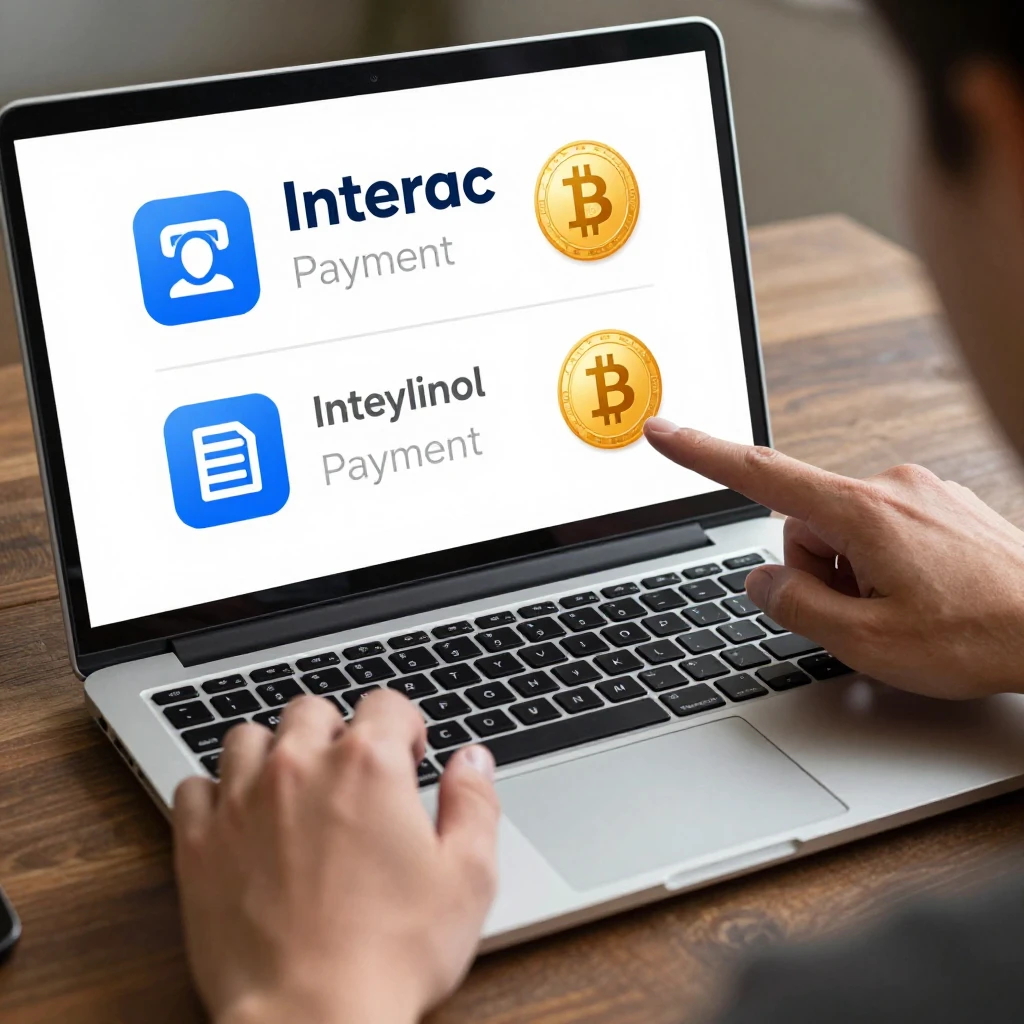
Three main routes for Quebec players. The honest differences sit in withdrawal speed and KYC friction, not in how easy the deposit is.
Interac and iDebit — The Default Canadian Rails
Interac e-Transfer is close to universal for Canadian players, and it's what most people default to. iDebit works like a bank-transfer voucher — you authorise a debit from your account through a third-party processor. Both deposit fast. Both withdraw at whatever speed the operator's own processing queue allows, which has nothing to do with the rail itself. I've had Interac withdrawals land in six hours on one site and five business days on another. The trap is deposit-only methods: plenty of sites will take a method for funding but won't pay out through it, forcing a cheque or a bank transfer with a fee bolted on.
Crypto — Speed, Privacy, and the Tax Question
Crypto appeals for two real reasons. Payouts that clear in minutes instead of days, and a degree of pseudo-anonymity the bank rails can't offer. The cost is volatility — hold your balance in BTC and your bankroll moves while you sleep, which is a genuine risk, not a technicality. On tax, the plain Canadian position: gambling winnings generally aren't taxable in Canada, but crypto gains and the reporting that comes with them are a separate matter entirely. Worth an accountant conversation rather than a forum thread.
Francophone vs. Anglophone Site Features — What Changes When You Switch Languages
Sometimes nothing. Sometimes quite a lot. The variables worth checking: whether bonus terms and wagering requirements are identical in both versions, whether support hours differ by language, whether the catalogue pushes different providers, and whether live-dealer tables actually have French-speaking dealers or just French-labelled menus. The one that matters most is the terms and conditions. The recurring problem in this market is an English T&Cs page that's a partial or outdated translation of the French original — and when a dispute lands, the version in the operator's home language is usually the one that governs.
How to Spot a Legitimate Operator in a Cross-Language Market
Here's the routine I use, short enough that I actually repeat it. Verify the licence at the regulator's register, not the footer. Read the withdrawal section before the bonus section — always, in that order. Test support in both languages and see whether the answers match. Confirm the account currency is CAD and not a converted equivalent that adds a hidden spread to every transaction. And check that the self-exclusion tools actually function, because a self-exclusion button that leads to a contact form is decoration.
Legitimacy in Quebec is a checklist, not a gut feeling. A polished French landing page is evidence of a marketing budget. That's the whole of it.
Conclusion
Back to Mile End. Laptop open, browser in English, query in French. That search was never really about language. It was about finding an operator that respects Quebec players no matter which of the two languages they happen to think in — and the market makes you work for it, because licensing, payments and the legal layer are all one system wearing two linguistic hats.
Three anchors, and that's the article compressed: know who regulates the site, know exactly how your money goes in and how it comes back out, and know what a legitimate operator looks like before you deposit rather than after. Everything else is design.
And the reminder that belongs at the end of a guide like this: 19+, set your deposit limits before your first session rather than after a bad one, and use Quebec's provincial self-exclusion register if you ever need to step back. Jeu : aide et référence is at 1-800-461-0140. Free and confidential.